
The True Cost of On-Site Security vs Remote Monitoring in 2026
In the current market, businesses have realized that having someone on-site to protect their facilities and business from theft and damage will not suffice. Those organizations are trying to find better ways to protect their facility with rising labor costs, a lack of available employees, and the increasing risk of crime. Therefore, more and more companies will turn from physical security within the business to utilizing AI-driven remote video monitoring systems, which are smarter, faster, and more cost-effective than traditional weapons-based security in 2026.
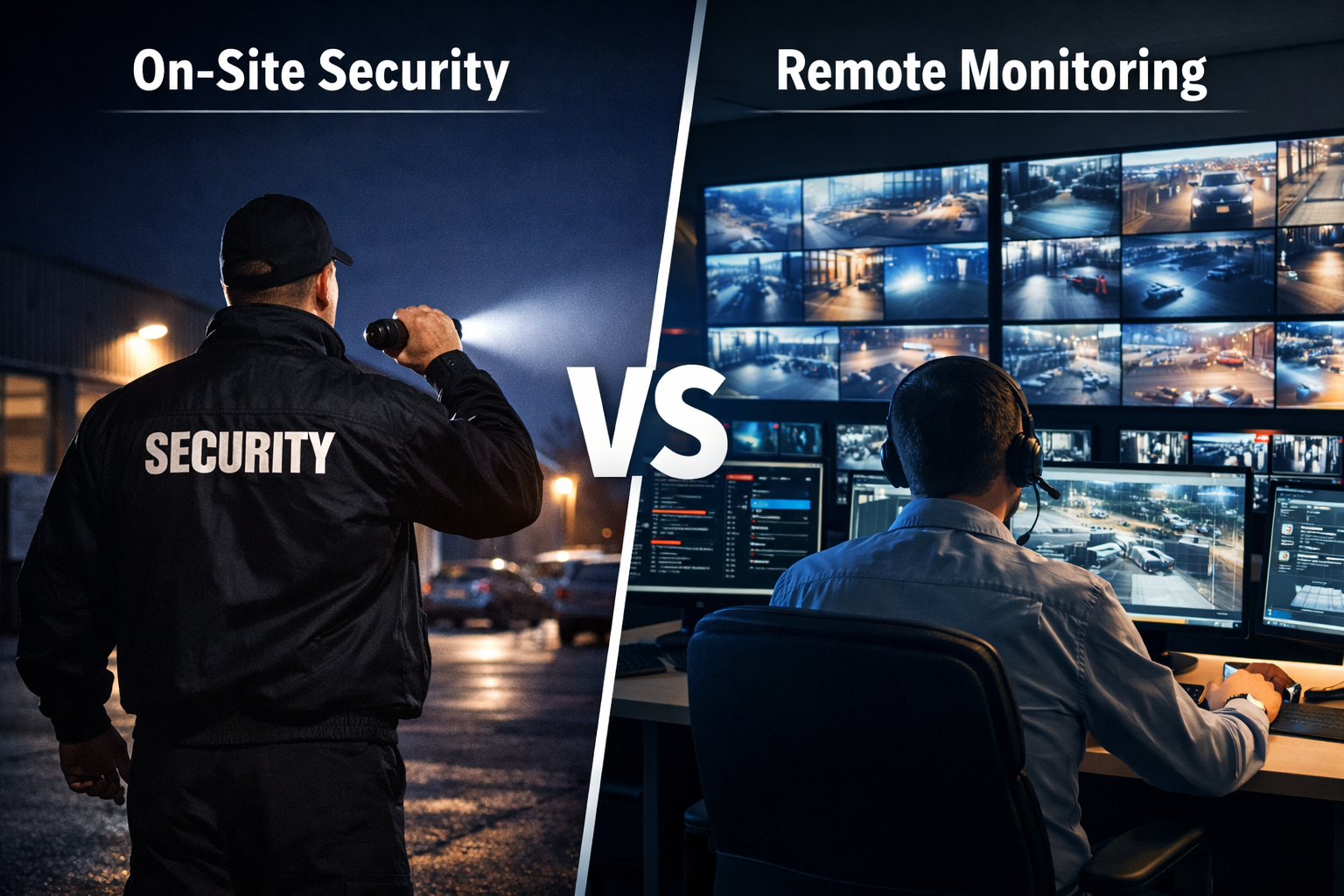
The Old Way of Securing Facilities: Physical Guards and CCTV Systems
For decades, physical guards were used by most companies to provide in-house security to businesses. However, as technology evolves and improves, so must the security solutions to protect businesses. Companies are experiencing:
- High staff turnover rate
- Increasing wage and benefits costs for staff workers
- Increased General Liability Insurance
- Lack of trained security guards willing to work
All of these problems are resulting in most companies paying more for security than they receive. Therefore, the way companies will make a significant improvement in the way they protect properties will be to transition to remote video monitoring using smart cameras, AI detection, and professional monitoring personnel, which provides companies with proactive rather than reactive security solutions.
Proactive vs. Reactive Security Solutions
Traditional Security Solutions: Reactive in Nature
The majority of physical security solutions currently available are reactive in nature because they do not deter theft or vandalism when they occur.
- CCTV cameras capture incidents once they have occurred
- Security guards respond after an incident has been reported
- Security reports are generated after an incident occurs.
In all three cases, the damage has already occurred before any action can be taken to prevent future incidents.
Here is a summary of the core benefits of remote monitoring security systems:
1. Live Voice Activation - This feature helps the remote operator alert trespassers in real time. Studies show that more than 90% of trespassers leave after being warned by a remote operator via a loudspeaker.
2. AI Alert Filtering - Modern technology filters out non-intrusions (i.e., weather, shadows, animals), which have reduced the number of false alerts by 98% or more.
3. Quick Identification/Escalation of Threats - Once a threat is verified, law enforcement can be contacted almost immediately.
The Real Cost Difference Between Security Models
On-Site Security Guards - An on-site security guard post is made up of at least the following: guard wages, benefits, insurance, training, supervision, etc.
The average monthly cost per location for on-site guards is between $15,000 and $25,000
For businesses with multiple locations, this expense can build up quickly.
Remote Monitoring - Remote monitoring systems include cameras (e.g., thermal), AI software, connectivity (internet), and professional oversight of the systems.
The average monthly cost per location for remote monitoring is between $1,500 to $3,500.
Annual Cost Comparison of Security Models
Based on the monthly expenses of maintaining an on-site security guard post versus a remote monitoring service and the number of hours each is staffed:
Annual Cost of On-Site Guards = $216,000 to $300,000
Coverage of On-Site Guards = Limited
Scalability of On-Site Guards = Low
Annual Cost of Remote Monitoring = $18,000 to $42,000
Coverage of Remote Monitoring = 24/7/365
Scalability of Remote Monitoring = High
Average Annual Savings = $180,000 per location.
Ways Different Industries Can Benefit From Remote Monitoring Security Systems
Construction - Remote monitoring systems can help stop theft of tools or copper and restrict unauthorized access.
Warehousing and Logistics - Remote monitoring systems allow businesses to track verified trailer movements, provide access logs, and create video security systems to support compliance and eliminate cargo loss.
Retail and Commercial Property - Remote monitoring systems allow for live intervention to prevent loitering, vandalism, or shoplifting from escalating into bigger problems.
Auto Dealerships Benefit from Thermal AI Technology to Prevent:
• Theft of catalytic converters
• Break-ins outside of normal business hours
Additionally, Many Modern Security Monitoring Technologies Provide Useful Data Beyond Basic Security Protections By:
• Monitoring occupancy, allowing for improved customer flow and peak hour analysis
• Helping identify risks such as blocked escape routes and slick flooring
• Encouraging insurance companies to provide an average savings of 15-25% for sites that have professionally monitored security.
Things to Think About Before Switching to Remote Monitoring
When moving to remote monitoring, a company should make sure of the following:
• A reliable internet connection
• Backup power systems
• Staff training and support procedures
Many companies utilize hybrid solutions that include both remote monitoring and patrols by off-duty law enforcement.
On-Site Guard vs. Remote Monitoring - Side-by-Side Comparison
Why Intelligent Security Systems Will Be The Future
Intelligent security is not just a cost; it is an important strategic investment and provides companies with:
• Reduced operating expenses
• Reduced losses
• Faster response times
• Improved compliance
The standard for the future of commercial security is intelligent remote monitoring.
Conclusion
In 2026 its simply not cost-effective or efficient to depend solely on unarmed security guards.
Artificial Intelligence-driven remote monitoring provides:
✔ Remote protection.
✔ Significant cost reductions.
✔ Dynamic scaling of coverage.
✔ Improved management of risks.
For organizations upgrading their security, this is the obvious choice.