
How to Deploy a Drone Security System in Your Business
Executive Summary
With increasing threats in security and constantly rising costs of labor, businesses have begun moving towards using drones to secure their premises.
But it’s not simply about investing in drones; it involves proper planning and implementation for effective operation.
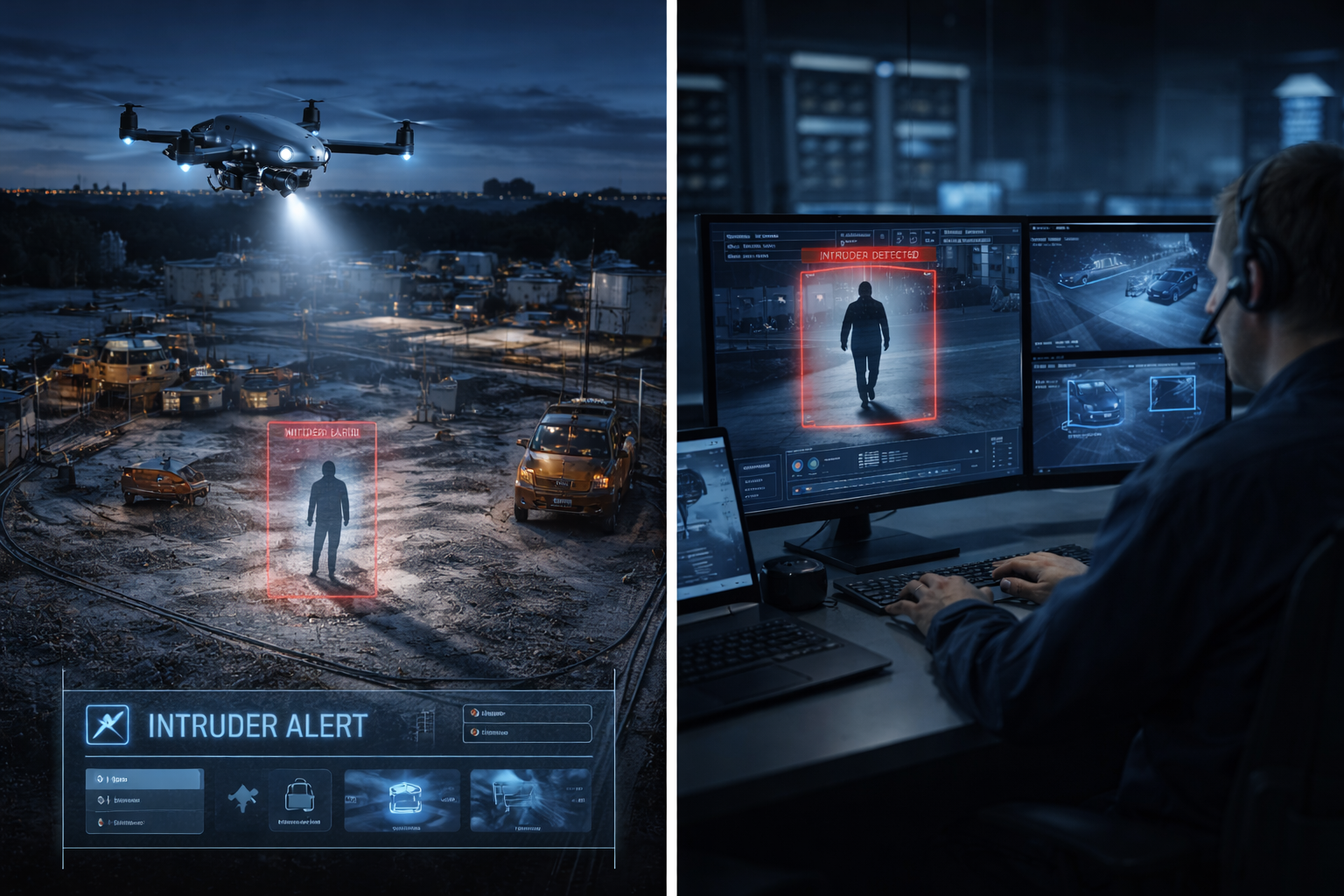
Companies that implement drone security systems effectivelycan realize:
• Upto 70-90%savings in security expenditure
• Fast response time (within 90 seconds) to any incidents
• Ongoing protection of perimeters
1. Setting Security Goals
Deployment starts with matching drone functionality tobusiness risk.
Set Primary Function
Various industries call for various setups:
A poor fit between technology and its purpose results in the highest rate of failed drone deployments.
Assessing Risks
• High-risk areas (entrances, blind spots)
• Low light security areas
• History of incidents
2. Selecting the Appropriate Deployment Strategy
Every drone security system does not work the same way.
Deployment Strategies
Most companies experience the highest ROI using acombination strategy (AI monitoring and drone responses).
3. Infrastructure and Technical Needs
There’s one thing about drone security technology that isoften overlooked: its infrastructure.
Connectivity
• Fast 4G/5Gor fiber internet needed
• Lower latency ensures real-time video
No connectivity means slow reaction time
Power and Docking
• Power to the drone docks at all times
• Batterybackup in case of power outage
Sensor Integration
• Temperature-sensitive cameras for night vision
• Video analytics powered by AI
• Motion detection sensors
4. AI & Surveillance Layer (Intelligence Layer)
Drones alone are not sufficient for security; AI &surveillance are required.
AI ThreatDetection
Current systems allow the following:
• Identify humans, cars, and animals
• Lowers false alarms by as much as 99%
• Automatically sound alerts
Instant Intervention
Remote personnel have the ability to:
• Convey verbal warnings
• Prioritize and respond instantly to any incidents
• Bring insecurity personnel
Security becomes pro-active rather than reactive.
5. Regulations and Compliance
The use of drones will have to adhere to aviation and dataregulations.
Important Points
• Permission to fly and airspace regulations
• Exceeding visual line of sight
• Privacy regulations for video surveillance
Data Management
• Video protection and storage
• Access control of videos
• Evidentiary requirements
Failure to comply will result in penalties, lawsuits, and shutdowns.
6. Staffing & Operational Preparedness
Even as we embrace automation, people will always benecessary.
Operational Needs
• Remote operators for drones (if need be per regulations)
• Operators
• Emergency Response Team
Training Needs
• Emergency procedures
• System operation
• Threat detection
Automated processess till need to follow operations protocols.
Cost Structure & ROI Analysis
It is essential to have insight into TCO before deployment.
Cost Components
ROI Factors
- Lowering guard cost
- Preventing theft
- Reduced insurance cost
- Greater efficiency
Most companies will experience a return on investment within 6-12 months after deployment.
8. Step-by-step Implementation Plan
Stage 1: Assessment
• Survey of site
• Risk assessment
• Feasibility analysis
Stage 2: Setup
• Drones' dock installation
• AI configuration
• Camera integration
Stage 3: Testing
• Patrol tests
• Alerts’ accuracy test
• Responses
validation
Stage 4: Operational Deployment
• Monitoring24/7 starts
9. Deployment Issues to Watch Out For
Major Threats
• Weak network infrastructure
• Insufficient staff planning
• Neglecting compliance standards
• Taking automation too far
This could result in higher expenses and decreased efficiency.
10. Future-Ready Security Solutions
The future of security is all about integration andautomation.
Future Trends
• A.I.-powered threat prediction
• Completely automated drone swarms
• Integration with smart cities
Those who act now will have a sustained competitive edge.
Conclusion
The implementation of a drone security system goes way beyond simply implementing another technology; it involves a shift in strategy regarding security.
Those who invest their time into a well-thought-out deployment process, one that includes proper infrastructure and ROI considerations, stand to benefit from:
• Increased speed
• Savings in expenses
• Greater effectiveness
From 2026 forward, drone security will not be a choice but a necessity.